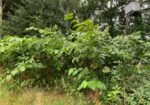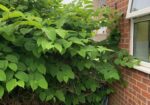
While Japanese knotweed and bindweed share many similar characteristics, their main difference lies in how they grow. Bindweed is a climbing plant that twists around other plants and structures, while Japanese knotweed has bamboo-like, stiff stems that stand upright without climbing.
To help you identify whether you have Japanese knotweed, bindweed, or another similar plant, such as houttuynia, Himalayan honeysuckle, broad-leaved dock, Russian vine, or bamboo, we’ve created this guide to highlight a few more distinguishing features between these plants.
| Feature | Japanese knotweed | Bindweed |
| Growth habit | Upright, bamboo-like stems | Climbing vine that twists around structures |
| Stem characteristics | Hollow, green with reddish tinge, zigzag growth | Thin, brittle, stretchy vines |
| Leaf shape | Large, heart-shaped with pointed ends | Smaller, arrowhead-shaped |
| Flower | White clusters (panicles) in late summer | Trumpet-shaped, white/pink flowers |
| Root system | Deep rhizomes (up to 3m deep and wide) | Creeping underground rhizomes |
| Seasonal changes | Dies back in winter, leaving brown stems | Dies back in winter, regrows rapidly in spring |
| Spread method | Spreads via rhizomes, no viable seeds | Spreads via seeds and rhizomes |
| Damage potential | Causes structural damage to buildings, roads, and drains | Strangles plants, damages pavements |
| Control difficulty | Requires professional management | Difficult to remove, regrows from fragments |
| Danger to wildlife | Not directly toxic, but invasive | Toxic alkaloids harmful to animals (e.g., horses) |
| Impact on property | Can devalue property and affect mortgages | Can ruin gardens and crop areas |

How to Identify Japanese Knotweed
- Look for cane-like stems: Japanese knotweed has tall, bamboo-like stems that are green with a reddish tinge and hollow when cut.
- Check for nodes and zigzag growth: The stems have distinct nodes with one bud per node, creating zigzag growth.
- Examine the leaves: The leaves are large, heart-shaped, and alternate along the stem.
- Look for flowers (late summer): In August, knotweed produces white flower clusters (panicles).
- Observe growth cycle: Knotweed is most visible in summer, but in winter, only dead, brown stems remain.
You will notice Japanese knotweed when it is most recognisable in the summer, with its large, full leaves. The height of the knotweed comes from its cane-like stem growth. The stem growth of knotweed is a key identifying characteristic. During the growing season, the stems are green, often with a reddish tinge and spots. If snapped or cut, you can see the stem is hollow. The stems have nodes, and from these nodes, buds are produced.
This is the key point: knotweed produces one bud per node, resulting in a zigzag-type stem growth and an alternate pattern of leaves, not mirror-symmetrical. The knotweed leaf is heart-shaped with a pointed end and typically a lush green. The leaves often lead to misidentification, with one common mistake being confusion with bindweed. However, if you compare the two side by side, the difference is quite clear. In the case of the giant knotweed hybrid, Fallopia x Bohemica, the similarity with the knotweed leaves stands out clearly, but the hybrid is larger with more frilly edges.
Around August, Japanese knotweed comes into flower, making it even more recognisable. The knotweed forms white clusters of flowers, known as panicles. Only the female form of the plant exists in the UK, so no viable seeds are produced. However, it can be pollinated by other knotweed species and hybrids.
Japanese knotweed is a herbaceous perennial plant, meaning its leaves and stems die down at the end of the growing season, and it lives for more than two years. When Japanese knotweed dies back for the winter, it becomes most difficult to recognise, often leaving only dead, brown stems standing from previous growing seasons as the key identifier.
Why is Japanese Knotweed Dangerous?
Japanese knotweed is the UK’s number one dangerous plant species and grows at rapid rates in virtually all types of areas, soils, and environments. The extensive root systems of Japanese knotweed can reach three metres deep and three metres wide in any direction. New shoots can grow from these extended roots, allowing the knotweed to spread continuously.
Knotweed is known for exploiting cracks in tarmac and concrete, causing damage to drains and sewers. If it gets close to walls and properties, it can lead to structural damage. The presence of Japanese knotweed on your property can cause significant devaluation, often deterring potential home buyers from completing a sale. Mortgage lenders may refuse to lend on properties affected by Japanese knotweed or may require a professional management plan to be in place.
Home sellers are legally required to report knotweed on a TA6 property information form. With an estimated 1.2 million properties affected by Japanese knotweed in 2023, homeowners mustn’t underestimate the problems this invasive plant brings.
How to Identify Bindweed
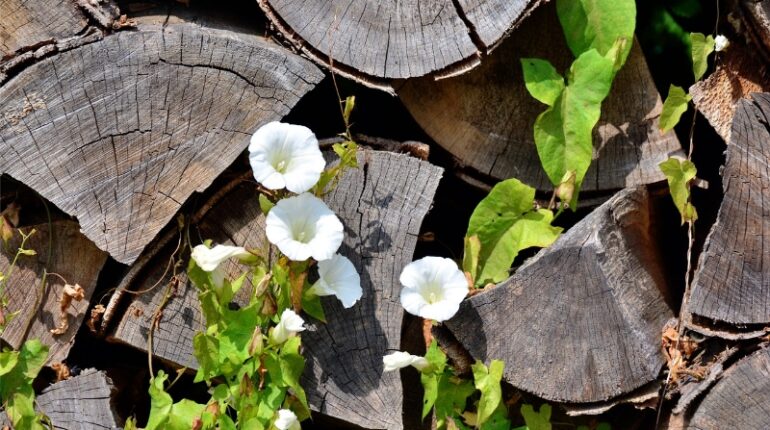
- Look for fast-growing vines: Bindweed grows quickly, winding around other plants and structures.
- Check for brittle, stretchy vines: The vines are stretchy and brittle, often breaking when pulled.
- Examine the roots: Bindweed spreads via rhizomes (creeping underground roots) that send up new shoots.
- Look for regrowth in spring: Bindweed dies back in winter but regrows rapidly in the spring from its root network.
- Be aware of seed production: Bindweed can set seeds from its flowers, which can also propagate through broken roots.
Bindweed grows very fast, winding itself around other plants as it climbs, attempting to strangle and smother them. It can even grow under pavements and burst through, eventually breaking them apart if not controlled properly. Compared to knotweed, bindweed is extremely difficult to control due to being both stretchy and brittle. When pulled by hand, it tends to break off, often leaving much of the roots behind. These creeping rootstocks are actually rhizomes, which grow and spread horizontally underground, sending shoots up to the surface along their length. On top of that, bindweed can easily regrow. Any piece of rhizome left in the ground can sprout, just like Japanese knotweed; we’ve seen this happen even with very small pieces!
Bindweed is a herbaceous perennial plant, like knotweed, so all the foliage and vines die back over the winter. However, the network of rhizome roots remains, storing energy from the previous season. Once temperatures warm up, it begins regrowing above ground at an alarming rate in the spring. This results in a fast-growing, massive plant with an extensive root network and countless sprouts of foliage. It has the potential to set seeds from its flowers, as well as propagate itself from broken roots if not carefully removed.
Why is Bindweed Dangerous?
Bindweed is a dangerous plant due to its toxic alkaloids and aggressive growth. These poisonous compounds make it particularly harmful to animals, especially horses, as ingestion can lead to digestive and nervous system issues, causing symptoms like colic, weight loss, and even death in severe cases.
Bindweed is a huge threat to other plants because it grows rapidly and competes aggressively for sunlight, nutrients and water. The plant’s ability to outcompete and smother other vegetation can destroy gardens and crop areas, making it an ecological and agricultural menace in both home gardens and farms
Which is worse Bindweed or Knotweed?
When comparing bindweed and Japanese knotweed, Japanese knotweed is generally considered the more destructive of the two. Knotweed is known for its ability to cause significant structural damage, as its deep, aggressive root system can infiltrate and exploit cracks in buildings, tarmac, and drains. Removing knotweed usually requires professional intervention, as its rapid spread and resilience make it difficult to manage without proper treatment. The presence of Japanese knotweed can severely impact property values and even prevent mortgage approvals.
The Final Say
While both Japanese knotweed and bindweed can cause damage to properties and gardens, knotweed is usually the bigger troublemaker due to its aggressive growth and potential for structural damage. Understanding the difference between these invasive species can help you tackle them more effectively and prevent costly issues down the line.
If you’re worried about Japanese knotweed or need some expert advice on how to handle it, get in touch with our team at Knotweed Specialists UK today.