
Japanese knotweed in Wiltshire
At Knotweed Specialists UK, we provide professional Japanese knotweed removal in Wiltshire, helping homeowners, landlords, and developers deal with one of the UK’s most persistent invasive plants. With over 20 years of industry experience, we deliver practical, long-term solutions across Swindon, Salisbury, Chippenham, Trowbridge, Devizes and Marlborough.
Japanese knotweed is not new to Wiltshire. Recent heat map data has highlighted a number of local hotspots, particularly around Swindon and Chippenham. Reports show 10 recorded cases within four kilometres of Swindon town centre, 14 around Chippenham, as well as confirmed occurrences in Trowbridge and Royal Wootton Bassett.
While the numbers are lower than major neighbouring cities like Bath or Bristol, knotweed is firmly established across parts of Wiltshire and continues to spread year on year.
If you need reliable Japanese knotweed removal in Wiltshire, call us today on 023 8251 2752 or request a free quote online.
GET A QUOTE TODAY

Do you think you have Japanese knotweed?
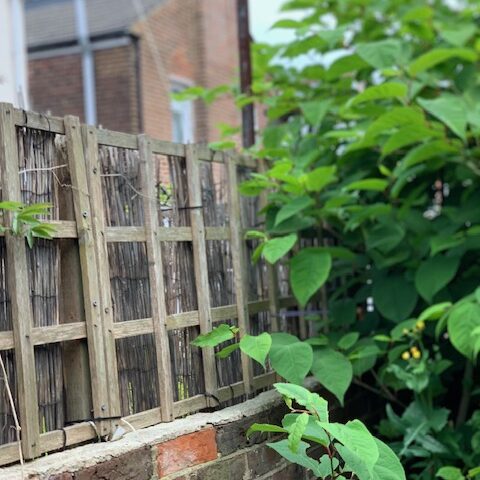
Japanese knotweed typically begins to emerge around March and April. After dying back over winter, it returns quickly in spring with reddish-purple shoots that rapidly grow into tall, bamboo-like canes. By summer, the plant can reach heights of over seven feet, forming dense green thickets that suppress surrounding vegetation. Mature plants produce clusters of small creamy-white flowers later in the season.
One of the main concerns with knotweed is its speed of growth. During peak season, it can grow at an alarming rate, exploiting weak points in hard surfaces such as cracks in masonry, paving, driveways and retaining walls. While dramatic structural damage is uncommon, the plant can worsen existing weaknesses and create costly problems if left unmanaged.
Importantly, what’s visible above ground is only part of the issue. Beneath the surface lies an extensive rhizome network that allows the plant to spread several metres horizontally and deep into the soil. Even small fragments can regrow, which is why attempting to remove it without professional guidance often makes the problem worse.
Professional knotweed surveys across Wiltshire
We carry out detailed commercial and residential Japanese knotweed surveys throughout Wiltshire to confirm identification and assess the full extent of any infestation. Whether you’re in a residential area, a period property or managing land, we tailor our approach to your specific site.
Our Japanese knotweed surveys assess the visible growth, likely underground spread, proximity to buildings and boundaries, and any potential risk to neighbouring land. This is especially important if you are planning to sell or purchase a property, as mortgage lenders usually require a formal management plan where knotweed is present.
Following the survey, we provide a clear, straightforward treatment plan. Depending on the size and location of the infestation, this may involve a structured herbicide programme over multiple growing seasons, excavation and controlled removal, or a combination of both. Our aim is always long-term control with minimal disruption.

How serious is Japanese knotweed in Wiltshire?
Wiltshire has seen consistent reports of Japanese knotweed, particularly in more urbanised areas. Swindon and Chippenham remain key hotspots, but cases have also been identified in Trowbridge and surrounding towns. Because knotweed dies back during winter, it can be harder to spot when viewing a property between late autumn and early spring, making professional surveys particularly valuable during property transactions.
Although some of the headlines around knotweed can sound alarming, the reality is that with the right expertise it can be successfully treated and managed. Early intervention is the most effective way to prevent spread, protect neighbouring properties and safeguard your home’s value.
FIND OUT MOREFrequently asked questions
Is Japanese knotweed common in Wiltshire?
Yes, particularly in and around Swindon and Chippenham. While Wiltshire does not have the same density of cases as larger neighbouring cities, confirmed sightings continue to be reported each year.
When does knotweed grow?
New shoots typically emerge in early spring (March or April), with rapid growth through summer. The plant dies back in winter, though the underground rhizomes remain active.
What happens during a knotweed survey?
We visit your property, confirm whether the plant is Japanese knotweed, assess how far it has spread above and below ground, and provide a written report with recommended next steps.
Can knotweed affect my property sale?
It can. Most mortgage lenders require a professional treatment plan to be in place before approving lending. Having documentation from a qualified specialist helps keep transactions moving.
Can I remove knotweed myself?
DIY removal is rarely effective and can unintentionally spread the plant further. Professional treatment ensures the infestation is properly managed and complies with environmental regulations.