Japanese knotweed is an invasive plant species that can cause significant damage to the environment and infrastructure if not treated correctly. This invasive weed can grow rapidly making it challenging to control. Before contacting a Japanese knotweed specialist to effectively manage the plant, it is crucial to understand its growth patterns and specific growing seasons.
Concerned about Japanese knotweed?
Book a professional Japanese knotweed survey to confirm the plant, understand how far it has spread and identify the most appropriate treatment.
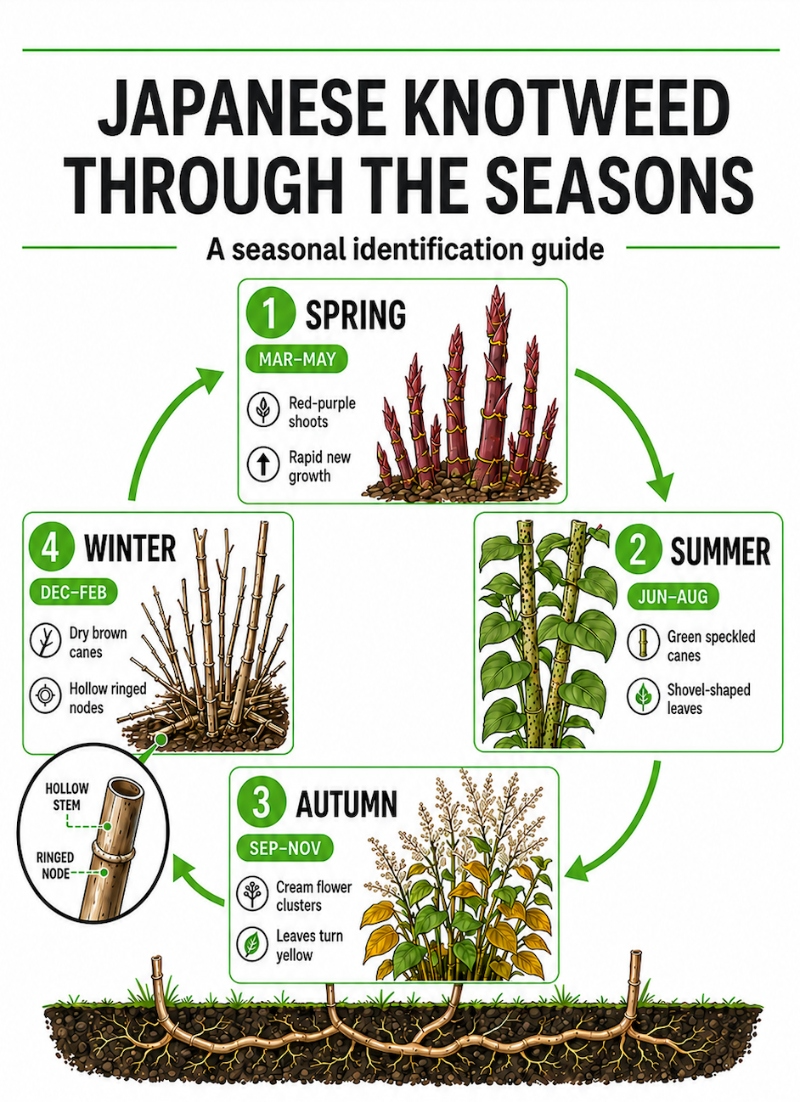
Book a knotweed surveySo, when is Japanese knotweed’s growing season? Japanese knotweed grows from early spring to autumn and can thrive in almost any soil type. It can grow up to 20 centimetres per day, reaching around 1.5 metres by May and 3 metres by June. In autumn, its leaves turn yellow and fall; in winter, its stems die back, while rhizomes over 1 metre deep remain dormant underground until spring.
Understanding Japanese Knotweed Growing Seasons
Spring
As temperatures rise and daylight hours increase, Japanese knotweed emerges from its winter dormancy. The plant’s underground rhizomes, which stored energy throughout the winter, begin to sprout. Shoots rapidly break through the soil, growing quickly and establishing themselves in new areas. By late spring, the plant can already reach significant heights, ready to dominate the landscape.
Summer
During the summer months, Japanese knotweed experiences its most aggressive growth phase. It can reach impressive heights of up to 2 metres, forming dense, towering stands. The heart-shaped green leaves grow in a distinctive zigzag pattern along the stem, contributing to its recognisable appearance. This vigorous growth continues throughout the summer, with the plant forming dense patches that outcompete native vegetation. The rapid and robust expansion during this season makes it particularly challenging to control.
Autumn
As autumn approaches, the growth of Japanese knotweed begins to slow. The vibrant green leaves start to turn yellow and eventually fall off. While the above-ground growth rate diminishes, the plant remains active underground. Its rhizomes continue to spread, establishing new growth points and ensuring the plant’s resilience. This underground activity makes Japanese knotweed in autumn particularly difficult to manage, as it can regenerate from even small fragments of its root system.
Winter
In winter, Japanese knotweed enters a period of dormancy. The above-ground parts of the plant die back, leaving behind a barren and seemingly lifeless appearance. However, this is merely a surface-level illusion. Beneath the ground, the plant’s extensive root system conserves energy, waiting for the arrival of the next growing season. During the cold winter months, Japanese knotweed focuses on conserving its resources, preparing for a burst of growth when spring returns.
Identifying Japanese Knotweed
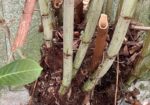
Spotting Japanese knotweed during its growing season requires keen observation of its unique characteristics. In early spring, watch for the appearance of red or purple shoots that rapidly develop into tall bamboo-like stems. These stems possess a distinct hollow and smooth texture with raised nodes that create a segmented appearance.
As the plant matures, its heart-shaped green leaves grow in a distinctive zigzag pattern along the stem. Throughout the summer, Japanese knotweed thrives, forming dense clusters that overpower surrounding vegetation. Towards late summer and early autumn, small clusters of creamy white flowers may grace the stem tips, adding to its recognisable features.
Effective Management Throughout the Seasons
To remove Japanese knotweed effectively and prevent it from spreading, it is highly recommended to seek the expertise of a specialised removal service, such as knotweed Specialists.
Japanese knotweed can be extremely resilient, and improper removal can lead to its rapid spread and regrowth. Our professional removal experts possess the knowledge, tools, and experience to employ the most appropriate Japanese knotweed removal method for management.
Our team are on hand to provide preventative measures and ongoing monitoring to ensure Japanese knotweed does not return, safeguarding the environment and infrastructure from its damaging effects all year round.
FAQs
Does Japanese knotweed grow all year round?
Japanese knotweed is a herbaceous perennial that does not grow all year round. Its growth cycle starts in spring with the emergence of small shoots, which rapidly grow to several metres in height by the end of summer.
In autumn, the plant dies back, lying dormant through the winter before beginning its growth cycle anew in the following spring.
What time of year do you treat Japanese knotweed?
Japanese knotweed is typically treated in late summer to early autumn, usually from August to September. During this period, the plant is actively transporting nutrients to its roots, making it more susceptible to herbicides.
Effective treatment involves cutting the stems followed by applying a suitable herbicide to the regrowth or directly injecting herbicide into the stems. This timing helps maximise the impact on the root system, improving the chances of successful management.
How does Japanese knotweed suddenly appear?
Japanese knotweed often suddenly appears due to its ability to spread through both natural and human-mediated processes. This invasive plant can propagate from small root fragments or stems, which are easily transported by water, soil movement, or human activities such as construction and gardening.
Even a tiny piece of root or stem can establish a new colony, leading to its sudden and rapid appearance in new locations.
What are the stages of the knotweed cycle?
Japanese knotweed’s life cycle begins with dormancy in winter, followed by early spring growth. As temperatures rise, the plant undergoes leaf development and rapid growth. During late summer, it flowers and then develops seeds.
The cycle concludes with autumn and winter decline, where the plant’s above-ground parts die back, preparing for the next dormancy phase.