
Japanese knotweed is a fast-growing perennial plant species that is renowned for its invasive nature and the potential harm it can cause to the environment. Its ability to spread rapidly and outcompete native plants has led to concerns about its impact on biodiversity and infrastructure, such as building foundations and roads. However, beyond its impact on ecosystems, there has been an ongoing debate about whether Japanese knotweed is poisonous, harmful, or dangerous to humans.
In fact, Japanese knotweed is not poisonous to humans, dogs, horses, or cattle, yet we recommend caution when touching the plant to avoid worsening any existing health conditions, allergic reactions, respiratory issues, or gastrointestinal discomfort. So if it isn’t poisonous, why does it carry such a fearsome reputation? The real danger of Japanese knotweed has very little to do with toxicity, and everything to do with what it does to buildings, land and property value, which is exactly what we unpack below, alongside the health effects worth knowing about.
Concerned about Japanese knotweed?
Book a professional Japanese knotweed survey to confirm the plant, understand how far it has spread and identify the most appropriate treatment.
Book a knotweed surveyThe Side Effects of Japanese Knotweed on Humans
Understanding the potential effects of Japanese knotweed on humans is important for protecting public health and safety. Awareness of these risks can help you take appropriate precautions and seek professional assistance before attempting to remove the plant from your property.
Potential side effects of Japanese knotweed include:
- Allergic reactions and skin irritation
- Respiratory problems, particularly in sensitive individuals
- Digestive issues
- Possible effects on existing health conditions
- An increased risk of complications for people with kidney conditions
- Unconfirmed effects during pregnancy and breastfeeding due to limited safety information
Understanding these potential effects can also support responsible land-management decisions.
Areas heavily affected by Japanese knotweed should be managed appropriately to reduce possible risks to human health and the surrounding environment.
1. Allergic Reactions and Skin Irritation
Japanese knotweed has the potential to cause allergic reactions in individuals due to its oxalic acid content. Oxalic acid in the plant can lead to skin irritation and rashes upon contact. When individuals, particularly children, come into contact with Japanese knotweed, the oxalic acid in the plant’s sap can trigger adverse skin reactions.
This contact may result in symptoms such as redness, itching, and the formation of blisters on the skin. Therefore, it’s important to take caution and avoid direct contact with Japanese knotweed to prevent allergic reactions. If you suspect knotweed on your property, wearing gloves and long sleeves before you get close enough to inspect it is a sensible precaution, and it’s one of the reasons we recommend a professional identification visit rather than pulling at the plant yourself.
2. Respiratory Issues
Whilst we highlight that Japanese knotweed is not necessarily harmful to humans through direct contact, there are definite risks when burning the plant. Improper burning of the plant can release harmful smoke particles into the air, potentially leading to respiratory issues. If Japanese knotweed is not removed correctly and is subjected to burning, it can release harmful smoke and particles into the air that can cause a risk to respiratory health.
This airborne pollution, when inhaled, has the potential to trigger or exacerbate respiratory symptoms. To prevent these effects, it’s essential to avoid burning Japanese knotweed and to ensure proper removal by experts. It’s also worth noting that burning Japanese knotweed material on-site without the correct permits can breach waste management regulations, since knotweed is classed as “controlled waste” under UK law, another reason DIY disposal by fire is best avoided.
3. Impacts Existing Conditions
The impact of Japanese knotweed on existing health conditions is a subject of concern due to the presence of resveratrol, a compound found in the plant. Resveratrol is known for its potential cardiovascular benefits and its potential to interact with certain medications. However, individuals with existing health conditions, especially those taking medications, should be cautious when considering the use of Japanese knotweed supplements or products.
4. Effects on the Digestive System
Whilst Japanese knotweed is edible, it is definitely not recommended. Eating Japanese knotweed can potentially lead to digestive concerns due to its laxative properties. Traditional herbal medicine has used Japanese knotweed for its potential benefits in treating various digestive issues. However, the laxative effect of the plant might not be suitable for everyone and could result in gastrointestinal discomfort.
Individuals considering the use of Japanese knotweed for digestive purposes should take caution and consult with a healthcare professional before incorporating it into their diet or wellness regimen. Some foragers do cook the young spring shoots (typically when the shoots are under 20cm and still tender, with a flavour often compared to rhubarb), but we’d stress that foraging knotweed carries an extra responsibility most other wild foods don’t: any part of the plant you cut, disturb or transport can trigger regrowth or spread it to a new site, and moving live knotweed material off your own land is a criminal offence under the Wildlife and Countryside Act 1981. In short, edible doesn’t mean encouraged.
5. Limited Research on Pregnancy and Breastfeeding
Due to the lack of research on the effects of Japanese knotweed on those pregnant and breastfeeding, it’s recommended to avoid using Japanese knotweed supplements or products.
The complex physiological changes that occur during pregnancy and breastfeeding require special attention, and introducing a substance with uncertain effects could have unintended consequences. By avoiding the spread of Japanese knotweed on your property and consulting with a Japanese knotweed removal specialist, you ensure the safety of both the mother and child.
6. Increased Risk for Individuals with Kidney Conditions
Japanese knotweed can make you ill due to its high quantities of oxalic acid. This compound, found in the plant, has been linked to the formation of kidney stones. If consumed or handled without proper precautions, exposure to oxalic acid in knotweed could lead to health issues, particularly for individuals prone to kidney stones.
Is Japanese Knotweed Poisonous to Dogs and Other Pets?
A question we’re asked almost as often as the human version: Is Japanese knotweed poisonous to dogs, cats or horses? The answer is no, Japanese knotweed is not classified as toxic to dogs, cats, horses or livestock, and it doesn’t appear on the RHS or ASPCA lists of poisonous plants. That said, we’d still discourage pets from grazing on or repeatedly chewing the plant, for the same reasons we’d caution a person: the oxalic acid content can cause mild stomach upset or mouth irritation in some animals if large amounts are consumed, and the coarse, fibrous stems and leaves aren’t easy to digest.
The bigger practical risk for pet owners is usually physical rather than toxicological, dense knotweed stands can hide uneven ground, broken fencing or building debris where knotweed has already caused structural damage, so keeping pets away from an affected area is sensible for reasons that have nothing to do with poisoning.
Poisonous vs Invasive: Understanding the Real Danger
This is the distinction that matters most, and it’s the one most homeowners miss. Japanese knotweed isn’t a health hazard in the way a poisonous plant like foxglove or deadly nightshade is. It’s a structural and legal hazard, and the consequences of that are, in practical terms, far more serious for most people than anything on the health side effects list above.
Property damage: Japanese knotweed spreads through an extensive underground rhizome (root) network that can extend up to 7 metres horizontally from the visible plant and around 3 metres deep. Rhizomes exploit existing cracks and weaknesses in tarmac, patios, drains, cavity walls and foundations, widening them over time. It rarely creates damage from solid concrete or masonry outright, but it’s highly effective at finding and worsening structural weak points that already exist.
Property value and mortgages: Since Japanese knotweed became a recognised risk factor in UK conveyancing, most mortgage lenders will ask specific questions about it via the TA6 Property Information Form, and many will require a knotweed management plan (backed by an insurance-backed guarantee) before lending against a property where it’s present. Untreated infestations can knock a meaningful percentage off a property’s value and, in some cases, stall a sale entirely until treatment is underway.
Legal obligations: While it’s not currently a criminal offence simply to have Japanese knotweed on your land, under the Anti-social Behaviour, Crime and Policing Act 2014 you can be issued a Community Protection Notice if you allow it to spread onto neighbouring land or a public space, and non-compliance can lead to a fine. Separately, under the Wildlife and Countryside Act 1981, it’s an offence to cause Japanese knotweed to grow in the wild, which in practice means garden waste, cuttings or contaminated soil must never be disposed of through general green waste collection or fly-tipped; it has to be handled as controlled waste and disposed of at a licensed facility, or treated on-site by a professional.

How to Identify Japanese Knotweed
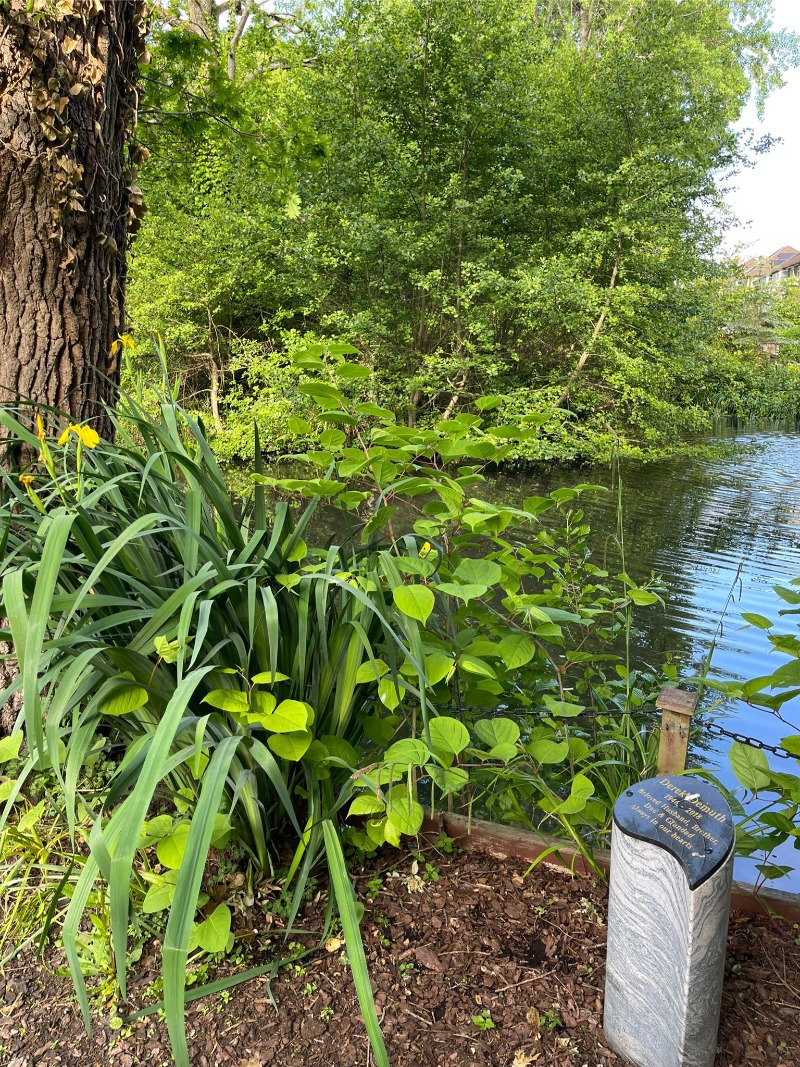
Because so much of the risk with knotweed comes down to acting early, correct identification matters. Key features to look for:
- Leaves: Heart or shovel-shaped, roughly 10-14cm long, with a flat base and pointed tip, arranged in a distinctive zig-zag pattern along the stem.
- Stems: Hollow, bamboo-like, with visible purple-speckled nodes. New spring shoots are often described as looking like asparagus with a reddish-purple tinge.
- Flowers: Clusters of small, creamy-white flowers appear in late summer (typically August–September), not the purple flowers some people expect — the “purple” most people notice is usually the stem speckling or the reddish young shoots, not the flower itself.
- Growth pattern: Dense, bamboo-like canes that can reach 2–3 metres in height by mid-summer, dying back to brown, brittle canes over winter.
- Common lookalikes: Bindweed, Russian vine, dogwood and ornamental ivy are frequently mistaken for knotweed, particularly in early spring before the leaf shape is fully established. If you’re not certain, a photo sent to a specialist is far quicker and safer than guessing.
How Japanese Knotweed Spreads
Japanese knotweed spreads almost entirely through its rhizome system rather than seed in the UK (viable seed production here is rare, since nearly all UK plants are a single female clone). A rhizome fragment as small as 0.7g, smaller than a fingernail, is enough to establish a new plant if it’s moved to fresh soil. This is why the most common causes of new infestations are:
- Fly-tipped garden waste or contaminated topsoil
- Strimming or mowing over knotweed, which scatters fragments
- Building or landscaping work that disturbs rhizomes without proper containment
- Flooding or watercourses carrying fragments downstream
Above ground, established knotweed can grow up to 10cm a day during peak growing season (May-June), which is part of why it so quickly outcompetes slower-growing native vegetation.
The Final Say from our Knotweed Specialists
While Japanese knotweed is not poisonous to humans, dogs, horses, or cattle, it can still have adverse effects on human health. While direct contact or consumption might not result in significant harm for most people, there have been instances of allergic reactions, digestion and respiratory issues and uncertainty for those pregnant and breastfeeding.
However, the greater concern lies in its aggressive growth and potential damage to property foundations, roads, and drainage systems. To mitigate these risks effectively, contact our team at Knotweed Specialists UK who specialise in identifying, controlling and removing Japanese knotweed in Hampshire and surrounding areas.
Frequently Asked Questions
What do I do if I come into contact with Japanese knotweed?
If you come into contact with Japanese knotweed, we recommend washing your hands straight away, as this helps remove any plant residues that could potentially cause skin irritation or allergic reactions. Do not try to remove the plant yourself as it can lead to the plant spreading further and becoming more difficult for us to locate.
What symptoms should I look out for after coming into contact with Japanese knotweed?
After coming into contact with Japanese knotweed, you may experience the following symptoms: skin irritation, allergic reactions, coughing, and wheezing. While this is very unlikely, we recommend avoiding direct contact with the plant and leaving its removal to a professional to effectively prevent regrowth.
Are there specific parts of the plant that are harmful?
No, there are no specific parts of the Japanese knotweed plant that are harmful to humans.
What do I do if I suspect Japanese knotweed?
If you suspect that Japanese knotweed is growing on your property, contact a local Japanese knotweed removal company to conduct a thorough site survey. They can identify the plant and provide an effective plan for its removal and prevention of regrowth.
Is Japanese knotweed illegal?
It is not illegal to let Japanese knotweed grow on your property. However, under the Wildlife and Countryside Act 1981, it is considered a legal offence to plant or grow Japanese knotweed in the wild.