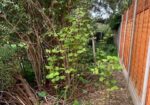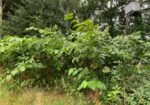
Japanese knotweed (Reynoutria Japonica) is a fast-growing, herbaceous plant that is native to China, Japan, and Korea. In its native range, it grows in damp, shady areas and is used as a traditional herbal medicine. The plant was introduced to the UK in 1825 as an ornamental plant, and it quickly spread throughout the country.
Today, Japanese knotweed is one of the most invasive plants in the UK, where it outcompetes native plants and causes extensive damage to buildings and infrastructure. The plant has deep roots that can grow up to 3 metres long, and its stems can reach heights of up to 3 metres. Japanese knotweed is a persistent problem in the UK, and it costs millions of pounds each year to control.
What is Japanese knotweed?
Japanese knotweed (Reynoutria Japonica) is a herbaceous perennial plant in the buckwheat family. It is native to Eastern Asia in China, Japan, and Korea. In North America, it is considered an invasive species. Japanese knotweed has stout stems with heart-shaped leaves.
The leaves are green and glossy and 7-14 cm long with a characteristic notched tip. The plant blooms from August to October. The flowers are small and white. The plant can grow up to 3 metres tall.
Japanese knotweed can be confused with other plants in the buckwheat family, such as giant knotweed (Polygonum sachalinense) and Russian-vine (Fallopia baldschuanica). It can also be confused with horsetail (Equisetum arvense), which is a member of a different plant family.
The plant can spread vegetatively by fragments of stem that are Broken off accidentally or purposely and transported by water or soil movements, as well as by rhizomes (the root system) that can grow up to 20 m horizontal distance from the parent plant.
Therefore if Japanese knotweed exists on your land, it can easily spread to neighbouring gardens and neighbouring land, potentially causing structural damage. It can also spread via seed dispersal by animals or humans. Seeds can remain viable in the soil for up to 20 years.
Invasive species
Japanese knotweed is an invasive plant species that is known for its rapid growth. Left unchecked, Japanese knotweed can quickly take over an area, crowding out native plants and disrupting ecosystem balance.
This aggressive plant can grow up to three feet per week, and its roots can extend up to six feet deep into the ground. In addition, Japanese knotweed produces seeds that can remain viable for up to twenty years.
Why is Japanese knotweed a problem?
Japanese knotweed is an invasive plant species that was originally introduced to the UK as an ornamental garden plant. However, it quickly spread beyond gardens and began to crowd out native plants.
Japanese knotweed is particularly destructive because it can grow up to three feet in a single growing season and can reach a height of 20 feet at maturity. The plant also produces a large number of seeds that are easily dispersed by animals and water.
Japanese knotweed is difficult to control because it has a deep root system that can extend 20 feet into the ground. As a result, the plant often crowds out native plants, alters ecosystems, and decreases biodiversity.
Japanese knotweed is also difficult to control because it can regenerate from even small fragments of its roots or stem. For these reasons, Japanese knotweed is considered one of the most aggressive and destructive invasive plant species in the UK.
Learn more on why Japanese Knotweed is a problem here.
Can we eradicate Japanese knotweed?
This plant can be extremely difficult to control once it takes root. However, though controlling knotweed may be difficult, there are several methods that can be used to effectively manage Japanese knotweed growth.
These include mechanical removal, chemical treatment, and smothering with mulch or plastic sheeting. While it may not be possible to completely remove it, with professional help, it is possible to keep this fast-growing plant in check.
Facts about Japanese Knotweed
- Japanese knotweed can grow up to 3 m tall
- Plant growth is extremely fast – up to 10cm a day!
- Japanese knotweed spreads rapidly
- You can be prosecuted under the Environmental Protection Act for allowing Japanese knotweed to spread into the wild or into a neighbouring property
Identification of Japanese Knotweed
Japanese knotweed can be confused with other plants in the buckwheat family, such as giant knotweed (Polygonum sachalinense) and Russian-vine (Fallopia baldschuanica). It can also be confused with horsetail (Equisetum arvense), which is a member of a different plant family.
To correctly identify Japanese knotweed, look for these characteristics:
- Tall plants – Up to 3 m high
- Stout stems – Hollow with nodes about 10 cm apart
- Dark purple or reddish brown internodes – Smooth surface that looks like it has been varnished
- Small branching roots at nodes – 5-10 mm in diameter
- Glossy green leaves – Alternately produced on stem; fused at base to form a sheath around stem; 7-14 cm long
- White flowers
If you think you have found Japanese knotweed on your property, take a photo of it and submit it to us identification.
Japanese Knotweed Control Methods
Once Japanese knotweed is established on a property, it is very difficult to control without professional intervention. Physical removal is often not possible because rhizomes can extend up to 20 m from the parent plant and break easily when excavated.
Also, even small fragments of rhizome or stem that are left behind after physical removal can regenerate into new plants. Contaminated soil can remain a problem for a long time. It is extremely labour intensive and as it is classed as controlled waste, requires disposal of the waste material at licensed landfill sites.
Chemical control options are available but they need to be applied correctly to be effective and they may take several years to fully eradicate the plant from an area. Local wildlife also needs to be considered. If you think you have Japanese knotweed on your property, contact a professional for help with control and removal options, in order to stop these invasive non native plants from spreading.
Japanese knotweed removal
At Knotweed Specialists UK, we are specialists at Japanese knotweed removal. Japanese knotweed is an invasive plant that can cause serious damage to your property. It has dense roots that can penetrate concrete and asphalt which creates problems everywhere it grows.
If you have Japanese knotweed on your property, it is important to remove it or control it as soon as possible. Allowing Japanese knotweed to grow uncontrolled into the wild can get you into trouble with the Environment Agency.
We use a variety of Japanese knotweed control methods to safely and effectively remove the weed, including physical removal, herbicide treatment, and more (including controlled disposal of waste). We are fully licensed, insurance backed and members of all the relevant industry bodies. Contact us today to schedule a consultation.