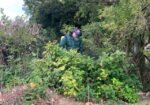
Japanese knotweed (Reynoutria japonica) is a highly invasive plant species that can quickly spread out of control and has become a major environmental and economic problem. It was originally introduced as an ornamental plant from Japan in the 19th Century, but has since spread out of control throughout the whole of the UK.
Places that Japanese knotweed can grow include roadsides, railways, riverbanks, streams, gardens, woodlands and through foundations, walls, fences and floors, with the ability to also grow through cracks in concrete, making it extremely difficult to identify and remove.

What is so bad about Japanese knotweed?
Japanese knotweed is a major problem for the council, residential and commercial properties, as it can cause serious damage to buildings and other structures, as well as reducing property values.
Japanese knotweed can be dangerous for the environment by outcompeting other plants, leading to a disruption of habitats and therefore a reduction in biodiversity.
This perennial plant’s aggressive growth and ability to regenerate from even the smallest fragments of root make it difficult to control and remove. Japanese knotweed can also have economic and social impacts, with difficulties in selling affected properties.
High invasive
Japanese knotweed is a destructive plant and is able to grow at an alarming rate of up to 10 cm per day, quickly taking over any area it occupies. Its roots can spread up to 7 metres horizontally and 3 metres deep, meaning it can cause structural damage to foundations, walls, and drainage systems.
Difficult to control
Japanese knotweed is difficult to control due to its robust and fast-growing roots, which can spread deep underground and cover large areas.
The plant’s ability to regrow and spread from even the smallest fragments, means that any attempt at removal or control must be carried out with great care and precision.
You should never attempt to remove or kill Japanese knotweed yourself, as even the tiniest fragments of rhizome (root) can cause the plant to regrow and possibly even spread to new areas.
Instead, you should contact our Japanese knotweed removal specialists, who will be able to complete a full Japanese knotweed site survey and then successfully remove the plant to ensure it does not regrow.
Japanese knotweed is difficult to control and mistakes can lead to further spread and increased damage. If you are found to be responsible for the spread of Japanese knotweed from your property onto neighbouring properties or council land, you could receive a fine of up to £5000 due to The Wildlife and Countryside Act 1981 and The Environmental Protection Act 1990.
There are various rules and regulations about dealing with and reporting Japanese knotweed, due to the damage that it can cause both structurally and environmentally. It is incredibly important that you do not let Japanese knotweed encroach from your property onto a neighbouring property or council land and if you spot Japanese knotweed on your property, you should contact our specialists for guidance immediately.
Our team at Knotweed Specialists UK have the expertise, equipment, and herbicides to safely and effectively control and remove the plant, while also ensuring compliance with regulations and providing ongoing monitoring and maintenance.
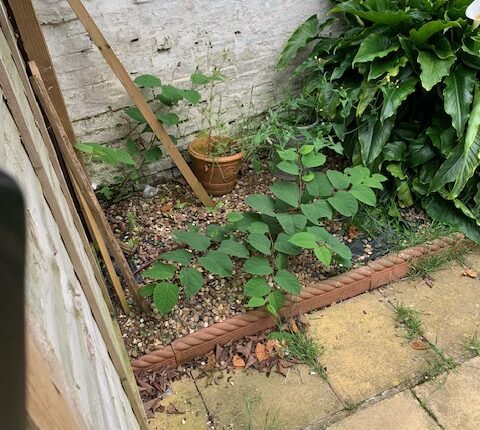

Does Japanese knotweed damage properties?
The aggressive growth of Japanese knotweed can cause major damage to properties, building structures and the environment. The plant’s extensive root system can penetrate deep into the ground and spread widely, as well as growing through cracks in concrete, causing damage to foundations, walls, and pipe systems.
As the roots grow, they can displace soil and cause structural instability, leading to cracking or sinking of foundations and walls. The roots can grow into and block pipes, causing drainage problems and potentially leading to flooding.
The damage caused by Japanese knotweed can be concerning for properties that are located near waterways or in flood-prone areas. The plant’s ability to grow quickly and form dense stands can exacerbate erosion and increase the risk of flooding, leading to further damage to buildings and infrastructure.
Is it hard to sell a house with Japanese knotweed?
Selling a house with Japanese knotweed can be a challenge, as it can reduce the value of a property between 5-15%. It is considered a serious problem by homebuyers and mortgage lenders, so you should consider having it professionally removed by a team of knotweed removal specialists before you attempt to sell.
The plant is known to be highly invasive and can pose a risk to the structural integrity of buildings, causing lenders to require specialist Japanese knotweed removal surveys or treatment plans before approving mortgages.
Identifying Japanese knotweed early and having it managed effectively is crucial to prevent further spread and minimise the impact on property values.
What is the environmental impact of Japanese knotweed?
The rapid growth of Japanese knotweed and its ability to outcompete native plant species can reduce habitat and food sources for local wildlife, leading to a decline in biodiversity and cause problems for local ecosystems.
The plant’s thick and fast spreading roots can also prevent the establishment of new plant species, further exacerbating the impact on biodiversity. Effective management and control strategies are crucial to protect local ecosystems, particularly in areas that are home to rare or endangered species.
Should Japanese knotweed be removed from your land?
Yes, Japanese knotweed should be removed by a specialist removal team as it’s a serious problem that requires careful management to prevent its spread and minimise its environmental and economic impacts.
Incorrect treatment and disposal can lead to further spreading, causing problems for both your own property and surrounding areas.
If you suspect that you have Japanese knotweed on your property or in your local area, it is important to seek advice from a qualified professional to determine the best course of action.
Get in touch with our specialists
Our team of experts at Knotweed Specialists UK are experienced and reliable professionals in identifying, removing and controlling Japanese knotweed in Hampshire, West Sussex and surrounding areas.
To prevent Japanese knotweed from growing on your residential or commercial property, get in touch with our removal experts to arrange a site survey.
FAQs
How much does Japanese knotweed removal cost?
Japanese knotweed removal in the UK can cost anywhere between £500-£50,000+, depending on the scale and complexity of the infestation. To find out more, we recommend booking a site survey to assess the extent of the infestation.
Can you get a mortgage on a property that has Japanese knotweed?
Getting a mortgage on a property with Japanese knotweed can be challenging, as lenders are often hesitant to approve loans for properties with this invasive plant. This is because Japanese knotweed can cause significant damage to buildings and infrastructure, which can lower the property’s value and increase the cost of repairs.
For more advice on removing Japanese knotweed before you sell, contact our team today.
Why is Japanese knotweed so bad in the UK?
Japanese knotweed causes major damage to properties and the environment, which is why it’s considered a highly invasive species in the UK. It can grow through concrete, tarmac and brickwork, causing damage to buildings, roads, and other infrastructure.
Soil or plant material that contains non-native and invasive plants such as Japanese knotweed can result in ecological harm and according to the Environmental Protection Act Regulations 1991, is classed as “controlled waste”, which should be disposed of at a landfill site or by a qualified professional safely.
Should Japanese knotweed be removed?
Yes, Japanese knotweed is a major problem and should be removed by a team of specialists, as it’s an invasive plant species that can cause significant damage to the environment, buildings, and infrastructure.
You should never attempt to remove knotweed yourself, instead, you should consult our team of removal specialists, who will use tried and tested Japanese knotweed control methods.