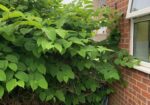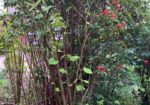
Japanese Knotweed, also known as Reynoutria japonica is a highly invasive plant species that can cause significant damage to both natural ecosystems and man-made structures at any time of the year. Originally introduced to Europe and North America as an ornamental plant, it has since spread rapidly and is now considered a major pest in many areas.
Japanese knotweed is highly dangerous and If left unchecked, it can cause serious damage to buildings, roads, and other structures. Its strong roots can penetrate through concrete, tarmac, and other materials, causing damage that can be costly to repair, so it’s important to learn how to spot it.
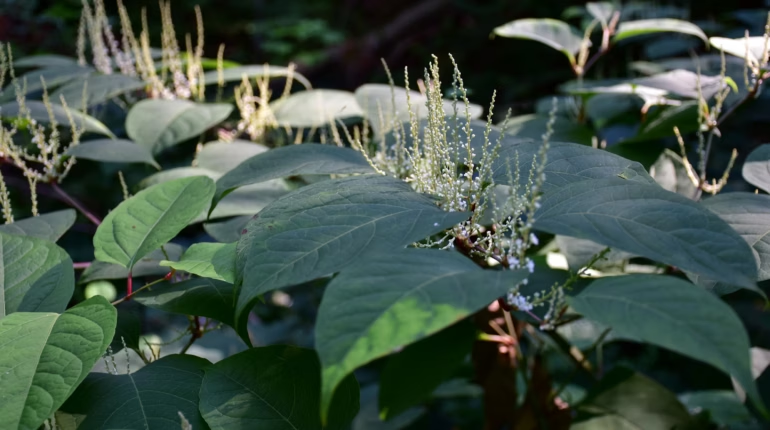
Identifying Japanese knotweed on your own can be challenging, but there are distinct signs to watch for. Look for tall, bamboo-like stems with heart-shaped leaves, a zigzag pattern where the leaves attach to the stem, and clusters of small, creamy white flowers that bloom in late summer and early autumn.

What does Japanese knotweed look like?
If you are still unsure whether you have Japanese knotweed, we discuss its distinct characteristics and growing habits below, which can help you confidently identify the plant.
Physical characteristics
To tell if it’s Japanese knotweed, identify the plant’s stems. Japanese knotweed plants can be identified by their bamboo-like stems, which are green with purple speckles. Japanese knotweed stems grow up to 3 metres in height and their leaves are oval-shaped and pointed at the end, with a distinct zig-zag pattern along the stem.
With dark green leaves with a waxy sheen on the surface. In late summer and early fall, the plant produces elongated clusters of creamy white Japanese knotweed flowers.
Growing habits
Japanese Knotweed is a fast-growing invasive weed that can spread quickly through underground rhizomes. These Japanese knotweed rhizomes can grow up to 7 metres from the original plant and can penetrate deeply into the soil.
The plant can survive in a wide range of soil types and can tolerate both dry and wet conditions. It is commonly found in areas such as riverbanks, roadsides, and abandoned lots.
Learn more about where Japanese knotweed grows here.

What time of the year does Japanese knotweed appear?
Japanese knotweed is present all year round, yet it is most difficult to identify in winter. During this season, the plant dies back above ground, making it harder to spot, but its underground rhizomes remain active and ready to spread once warmer weather returns.
Where to find Japanese knotweed
Japanese knotweed can be found in many countries around the world, including the United Kingdom, the United States, Canada, and Australia. It typically grows along riverbanks, roadsides, and in waste areas.
To identify Japanese knotweed, look in gardens, parks, and other residential areas where it may have been introduced as an ornamental plant.
Once established, Japanese knotweed can be difficult to control and can cause damage to buildings, roads, and other infrastructure. It is important to properly identify and manage Japanese knotweed to prevent its spread and mitigate its negative impacts.
What can be mistaken for Japanese knotweed?
Several similar garden weeds can be mistaken for Japanese knotweed, especially during the early stages of growth. Some common plants that are often mistaken for Japanese knotweed include:
1. Bindweed
Bindweed, often mistaken for Japanese knotweed due to its similar-shaped leaves, is actually a vine rather than a shrub. While the leaves of bindweed share the heart-shaped characteristic, they differ in growth pattern.
Bindweed produces long, twisting vines that can wrap around other plants and structures, making it a climbing plant. Japanese Knotweed, on the other hand, is a tall, upright shrub with bamboo-like stems. This distinction in growth habits is crucial in accurately identifying these two invasive plants, as their control methods may vary.
Find out more about the difference between Japanese knotweed and bindweed here.
2. Bamboo
Bamboo shares similar bamboo-like stems with Japanese knotweed but differs in its leaves and growth height. Bamboo features elongated, lance-shaped leaves, in contrast to the heart-shaped leaves of Japanese knotweed.
Bamboo generally grows taller and forms dense groves, while Japanese knotweed maintains a more upright, shrub-like appearance. Recognising these differences is crucial for proper identification and choosing the appropriate control measures.
3. Houttuynia
Houttuynia has a similar appearance to Japanese knotweed due to its similar overall appearance. However, a key distinguishing feature is its heart-shaped leaves, which differ from Japanese knotweed leaves which are spade-shaped.
This distinct leaf shape sets Houttuynia apart. Properly identifying this difference is essential, as Houttuynia is a separate plant species with its own unique characteristics and uses in various horticultural contexts.
4. Russian Vine
Russian vine shares similar spade-shaped leaves with Japanese knotweed but differs in its growth habit due to being a climber, not a shrub. Recognising this distinction is essential for accurate plant identification, as their growth patterns vary significantly, leading to different management approaches.
Having trouble spotting Japanese knotweed?
Spotting Japanese knotweed can be a challenge, but with the right knowledge and tools, it can be identified and controlled. It’s important to keep an eye out for the plant’s distinct features, its stems are hollow with, heart-shaped leaves, and small white or green flowers.
Monitoring areas where the plant is known to thrive, such as near water sources or disturbed soil, can help identify new infestations early on. If you suspect you have Japanese Knotweed on your property, it’s best to seek the advice of our professional Japanese knotweed removal specialists who can help you develop a plan to manage and eradicate the plant.
At Knotweed Specialists UK, we provide a Japanese knotweed identification service. Make sure to take action before it’s too late and don’t leave your Japanese knotweed problem unchecked. Contact us today to arrange a Japanese knotweed survey.
FAQs
Can you spread Japanese knotweed by walking on it?
Yes, walking on Japanese knotweed can spread its growth and cause the plant to spread to new areas. The plant can easily regrow from small fragments of its stem, root, or rhizome.
So, if you accidentally step on the plant or cut it with a lawnmower, you could unintentionally spread it to other parts of your garden or neighbourhood. It’s important to take caution and avoid disturbing Japanese knotweed as much as possible to prevent its spread.
Should you pull out knotweed?
It is important to properly identify any plant before attempting to remove it, especially if it resembles Japanese knotweed. Misidentification can lead to the accidental removal of beneficial plants or the spread of invasive species.
If you have knotweed growing on your property, it’s generally recommended to remove it as soon as possible. Knotweed is an invasive species that can grow rapidly and outcompete native plants, causing damage to ecosystems and even structures such as buildings and roads.
However, removing knotweed can be difficult and requires a strategic approach to prevent its spread. It’s best to consult with a professional who has experience in knotweed removal to develop a plan that is tailored to your specific situation.
Does Japanese knotweed ever go away?
Our knotweed specialists play a crucial role in helping to eliminate Japanese knotweed. Our professionals have expertise in identifying and assessing the extent of infestations and can develop a tailored management plan to control the plant and prevent its spread.
Depending on the severity of the infestation, our knotweed specialists use a range of techniques to eliminate Japanese knotweed, such as digging and removing the plant and its roots, using herbicides, or deploying specialist control methods such as stem injection or soil sterilisation.
Our Knotweed specialists provide ongoing monitoring and maintenance to ensure that the plant does not return. By working with our knotweed specialists, you can ensure that Japanese knotweed is effectively managed and eliminated, reducing the risk of damage to buildings, infrastructure, and the environment.