Yes, Japanese knotweed can be killed, but it can be very difficult and requires expert methods and specialist equipment. Professional removal methods include glyphosate-based herbicide application, careful root removal, and ongoing monitoring, as the plant can regenerate from even the smallest fragments.
DIY methods are not recommended as they are often ineffective and can encourage further spreading of the plant, potentially even leading to prosecution if you are found responsible. Japanese knotweed is classed as controlled waste and therefore must be disposed of at a licensed site and under strict precautions.
There are many rules surrounding Japanese knotweed removal, so it is recommended that you consult a professional removal company that will be able to completely remove the Japanese knotweed from your property or land, and ensure it does not regrow.
Japanese knotweed (Reynoutria japonica) is an invasive, non-native plant species that can cause significant damage to buildings, roads, and other infrastructure. Its ability to grow and spread quickly has made it a major problem for residential homeowners, businesses, and local authorities.
How to identify Japanese knotweed
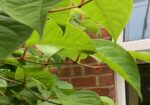
To identify Japanese knotweed, look for large green leaves that are shaped like a shovel, with hollow stems that are similar to bamboo. It typically grows in dense stands and can reach heights of up to three metres. In late summer or early Autumn, Japanese knotweed also produces clusters of small, white or cream-coloured flowers.
One of the most distinctive features of Japanese knotweed is its ability to grow at an incredibly fast rate and spread aggressively, often causing damage to buildings and disruption to the environment.
If you think you may have Japanese knotweed on your property, you should contact a specialist Japanese knotweed removal company, who will schedule a survey, identify it, and remove it to ensure that it doesn’t come back.
How to kill Japanese knotweed
To completely kill Japanese knotweed, you need a multi-season approach, which often includes a stem herbicide injection, a glyphosate-based herbicide application combined with expert cutting, or complete excavation and removal. Professional treatment is crucial, as Japanese knotweed’s deep root system (rhizome) can regrow from even the smallest fragments.
Our PCA-accredited experts at Knotweed Specialists UK use advanced herbicide treatments and strict disposal methods to ensure complete removal.
The 3 main control methods that our specialists use to kill Japanese knotweed are:
1. Professional Herbicide Treatment (Stem Injection)
| Method | A fast-acting herbicide is injected into the lower part of each mature stem using a stem injector, targeting the plant at the core. |
| Benefits | This method is great for sensitive areas where Japanese knotweed is surrounded by other plants that could be damaged by herbicide spraying. By targeting the plant at the stem, the risk of damage to surrounding vegetation is hugely reduced. |
| Time Scale | Usually requires repeated applications over 6 to 12 months to fully weaken and kill the plant. |
| Limitations | Whilst this option is great for large plants, small Japanese knotweed plants cannot be treated with this method due to their size. |
2. Professional Herbicide Treatment (Cutting and Spraying)
| Method | The stems are cut to about 4 feet from the ground, and then a strong herbicide is sprayed over the freshly cut stems, allowing it to seep directly into the plant’s root system. |
| Benefits | This works well on larger areas of growth and allows gradual weakening of the plant over time, whilst having an excellent success rate. |
| Time Scale | Usually requires repeated treatments over 2 to 4 growing seasons (2-4 years), depending on the size of the infestation. |
| Limitations | This is less effective in areas where access is difficult or where other vegetation might be affected by spray drift. |
3. Excavation and Removal
| Method | Japanese knotweed plants and all surrounding soil are dug out, with the material either being stockpiled on site for herbicide treatment or removed entirely to licensed waste facilities. |
| Benefits | Excavation is particularly useful when the land needs to be developed quickly, as it clears the site immediately while still allowing the knotweed to be treated. |
| Time Scale | Excavation clears the land straight away, but the site will still need to be monitored over the next few years to make sure that it doesn’t grow back. |
| Limitations | Excavation is usually more expensive than using herbicide alone, and contaminated waste must be disposed of safely according to legal requirements. Without proper follow-up treatment, even small root fragments can regrow. |
How long does it take to kill Japanese knotweed?
Killing Japanese knotweed can take at least 3-5 years, as the plant is challenging to fully remove. The length of time required will depend on the method used to kill the plant, as well as the size and extent of the infestation.
It’s important to note that even after the plant has been killed, it is recommended to monitor and treat the Japanese Knotweed for several years to ensure that no new growth occurs. Consulting a Japanese knotweed removal specialist is recommended, as they will be able to determine the most effective method of removal and ensure that it does not regrow.
Our experts have an insurance-backed guarantee to ensure that all work is carried out safely, effectively, and in compliance with legal requirements, giving you complete peace of mind.
Can you burn Japanese knotweed?
Yes, it is technically possible to burn Japanese knotweed, however this method is not recommended due to the increased risk of regrowth and further spreading.
Even when dried and burned on-site, fire very rarely kills the underground rhizomes, and any unburned material or ash could regrow in new locations. There are also environmental risks, including smoke production, harmful airbourne particles, and potential pollution of soil or water.
Because of these risks, professional herbicide treatment or controlled excavation is much safer and more reliable for killing Japanese knotweed.
Why is Japanese knotweed so hard to kill?
Japanese knotweed is notoriously difficult to kill due to its deep and extensive root system, which can spread up to seven metres in all directions. Even small fragments of root left in the soil can regenerate into new plants.
This means that simply digging up or strimming the plant can actually make the problem much worse. Japanese knotweed has a high tolerance for herbicides, making it difficult to eradicate with traditional weed killers.
Japanese Knotweed grows in a wide variety of soil types and can survive in extreme temperatures, further adding to its resilience. Because of these factors, it is important to use a combination of methods and seek the help of a specialist to effectively and permanently eradicate Japanese knotweed.
The final say
Removing Japanese knotweed requires a good understanding of the plant and the right removal methods. Whilst it’s possible to try and remove it yourself, it’s usually slow, difficult, and can make the problem worse.
Getting assistance from our expert team is the safest way to make sure the plant is fully removed and won’t return. Our professionals have the training, experience, and equipment needed to handle even the most challenging infestations.Get in touch with our friendly experts today to book a survey and arrange complete removal.