
For any gardener, dealing with weeds is an ongoing battle. No matter how often you pull them, they always seem to come back. But what if there were a way to get rid of them once and for all? That’s where Roundup comes in.
Roundup is a weed killer that has been on the market for decades and is one of the most popular herbicides available.
So, does Roundup work on Japanese knotweed? Yes, it can control the plant, but domestic Roundup is unlikely to eradicate an established infestation. Japanese knotweed can survive through its underground rhizomes and regrow, so professional treatment normally requires carefully timed applications over several growing seasons.
Concerned about Japanese knotweed?
Book a professional Japanese knotweed survey to confirm the plant, understand how far it has spread and identify the most appropriate treatment.
Book a knotweed surveyUnderstanding Japanese knotweed
Japanese knotweed is a huge problem in gardens across the UK. Growing to over 3m in height and spreading deep underground, this isn’t your average weed.
Its extensive underground growth is one of the reasons why controlling Japanese knotweed with domestic weed killer can be difficult.
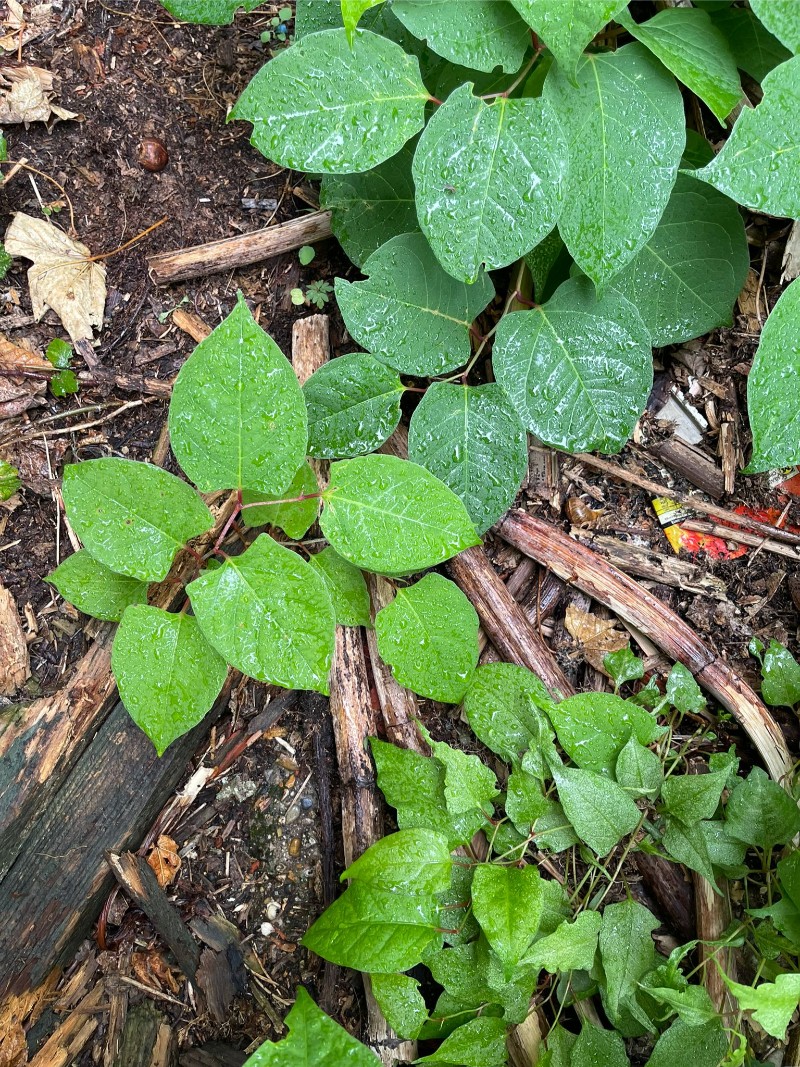
How Does Roundup Work?
Roundup works by poisoning the roots of plants. The active ingredient in Roundup is glyphosate, which is a broad-spectrum herbicide. This means that it will kill most types of plants, including both grasses and broadleaf plants.
When you spray Roundup on a plant, the glyphosate enters the plant through the leaves and eventually makes its way to the roots.
Once the glyphosate reaches the roots, it prevents the plant from being able to produce the proteins it needs to survive. As a result, the visible plant may begin to die back within a few days to a week.
Will Roundup Kill Japanese Knotweed?
The short answer is that Roundup can kill visible Japanese knotweed growth, but domestic products are unlikely to eradicate an established infestation completely. The plant can survive through its extensive underground rhizomes and regrow after the visible stems die.
Professional control normally requires carefully timed herbicide applications over several growing seasons, followed by monitoring and treatment of any regrowth.
Roundup is also non-selective, so it can damage other plants it contacts. Always follow the instructions and restrictions on the product label.