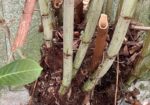
Common garden weeds can offer many benefits, such as providing nutrients and food for insects, birds and small animals. However, in some cases, these weeds can grow very quickly and become invasive, robbing other plants of essential nutrients and posing a threat to animals if ingested.
In this blog, we’ll explore some similar-looking plants to Japanese knotweed, looking at their properties and benefits, their potential adverse effects and how to remove them.
What is Japanese knotweed?
Japanese knotweed (Reynoutria japonica, previously Polygonum cuspidatum) is a fast-growing, herbaceous perennial plant native to East Asia. Introduced to the UK in the 19th century as an ornamental species, it has since become one of the country’s most invasive weeds.
The plant has hollow, bamboo-like stems, heart-shaped green leaves, and clusters of small white flowers that bloom in late summer. It can grow up to 10 feet tall above ground, while its extensive underground rhizome (root) system can spread up to 7 metres (around 23 feet) horizontally and 3 metres (10 feet) deep.
Why is Japanese knotweed dangerous?
Japanese knotweed is not toxic to humans or animals, but it poses a significant threat to buildings, gardens, and local ecosystems because of its aggressive growth. Its powerful rhizomes can penetrate tiny cracks in concrete, brickwork, and tarmac, leading to costly structural damage to foundations, driveways, retaining walls, and drainage systems.
In addition to property damage, knotweed rapidly outcompetes native plants by forming dense thickets that block sunlight and deplete the soil of nutrients, reducing biodiversity and harming local wildlife habitats. Because even a small fragment of its root system can regrow into a new plant, incorrect removal can easily cause further spread.
Under UK law, allowing Japanese knotweed to spread onto neighbouring land can result in legal action, and it is listed under Schedule 9 of the Wildlife and Countryside Act 1981, which makes it an offence to cause it to grow in the wild. For this reason, professional identification and removal are essential.
Similar Japanese knotweed plants
Japanese knotweed is often mistaken for several other common garden plants that share similar leaves or stems. However, knowing how to tell the difference can save you stress — and prevent unnecessary professional callouts.
Here are some plants that are commonly confused with Japanese knotweed and how to distinguish them:
| Similar Plants to Japanese knotweed | How to Effectively Remove |
| Russian Vine | Cut back regularly and dig out as much of the woody root system as possible. If it keeps coming back, a systemic weedkiller may be needed to control regrowth. |
| Himalayan Balsam | Pull or cut before seed pods develop (usually June–July). Handle carefully and dispose safely, as seeds can scatter several metres. |
| Dogwood | For small plants, you can prune or dig them out, while larger shrubs should be cut back and their roots removed to prevent regrowth. |
| Chickweed | Pull by hand or smother with mulch. |
| Nettles | Fork out roots, cut regularly, or smother with mulch. |
| Bindweed | Pull roots repeatedly, cut at soil level, or apply glyphosate. |
| White clover | Fork out roots or rake before mowing. |
| Bamboo | Cut canes to ground level, dig out rhizomes, and install a root barrier for long-term control. Regular monitoring is essential. |
1. Russian Vine (Fallopia baldschuanica)
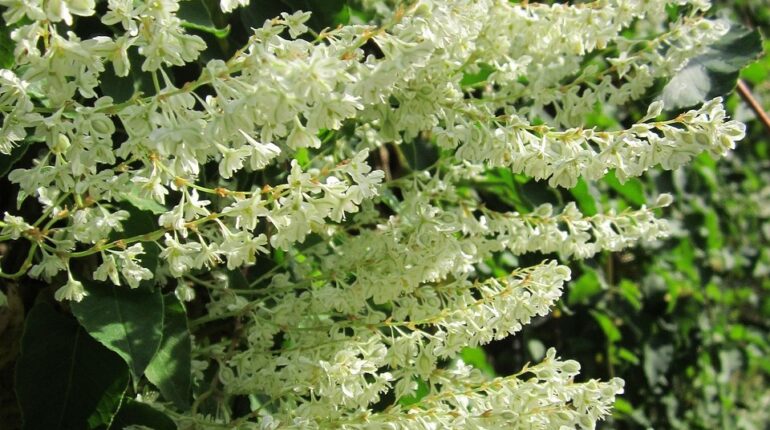
Also known as “mile-a-minute vine,” this plant shares knotweed’s fast growth rate and produces similar clusters of creamy-white flowers. However, Russian vine’s stems are woody and twining rather than hollow and upright, and its leaves are more triangular than shovel-shaped.
To get rid of Russian vine, cut it back regularly and dig out as much of the woody root system as you can. If it keeps coming back, you may need to use a suitable systemic weedkiller to stop it from re-growing.
2. Himalayan Balsam (Impatiens glandulifera)
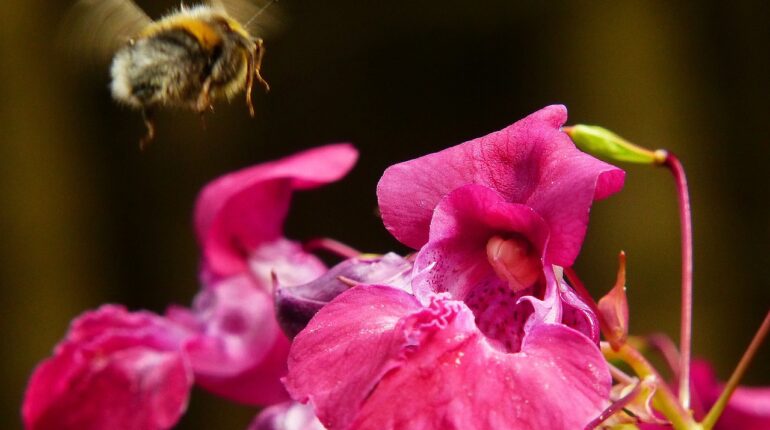
Himalayan balsam is a fast-growing invasive plant that loves damp areas and riverbanks, often shooting up to around 2.5 metres tall. While its leaves can look a little like Japanese knotweed, it’s easy to tell apart once it blooms — its pink, helmet-shaped flowers and smooth, hollow stems are quite distinctive. The plant also gives off a light, sweet scent.
To remove Himalayan Balsam, pull or cut the plant before the seed pods develop (usually around June to July). Be careful when handling them — the seed pods can burst and scatter seeds several metres if disturbed, so always dispose of them safely.
3. Dogwood (Cornus spp.)
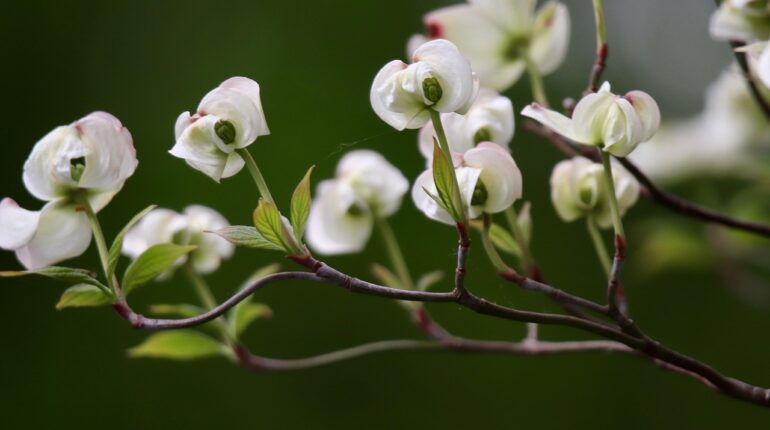
Dogwood can sometimes be mistaken for Japanese knotweed, especially in winter when its stems turn a striking red. However, its leaves grow directly opposite each other — unlike knotweed’s alternating pattern — and its stems are woody rather than hollow. Dogwood usually grows as a shrub or small tree, adding colour to gardens year-round.
For small plants, simply prune or dig them out. If you’re dealing with a larger shrub, you may need to cut it back first and then remove the roots to stop it from growing back.
4. Chickweed
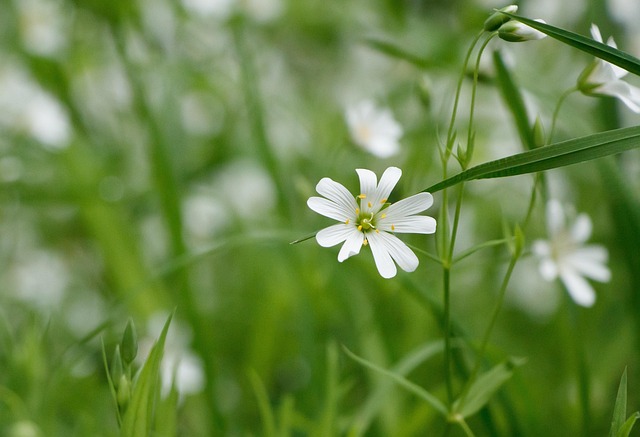
Chickweed (Stellaria media) is a common garden weed that can often be found growing in gardens and fields. Whilst it’s not dangerous, it can spread easily through seeds on muddy boots or when soil is moved from one area to another.
Chickweed can be identified by its tiny white flowers embedded in a cluster of bright green, oval-shaped leaves and thrives in moist soil. It can grow at any time of year but is most common in milder weather.
Providing nectar for bees and seeds for various small birds, chickweed is a beneficial weed to keep in your garden to support local ecosystems, so you do not need to remove it. However, when it’s fast germinating seeds spread, it isn’t uncommon for chickweed to form a blanket over bare soil, so it can become inconvenient for those wishing to landscape their garden to perfection!
To remove chickweed, you can either pull it out of the soil (along with its shallow roots), or you can smother it in mulch, which will prevent the seeds from germinating and restrict nutrients, causing it to die off.
5. Nettles

Stinging nettles (Urtica dioica) are often mistaken for Japanese knotweed, and they are a herbaceous perennial plant, frequently found growing in gardens, alongside hedges, in fields or in woodland. Originating in northern Europe, Asia, and western North Africa, stinging nettles can now be found worldwide and usually grow during spring, summer and autumn.
Characterised by their jagged-edged, green leaves, stinging nettles are covered in tiny hairs which, when touched, release formic acid and histamine into the skin, causing a nasty reaction.
This sting is an evolutionary adaptation to protect itself from predators.
Stinging nettles are considered to be invasive because of how easily they spread through their rhizomes, seeds and stems.
Nettle stings are not usually dangerous, just painful and inconvenient to encounter. However, very occasionally, some people may experience an allergic reaction, which is considered a medical emergency, and you should seek urgent medical help.
To remove stinging nettles, you can either fork them out with their roots, cut them down regularly to weaken them, or smother them in mulch to restrict nutrients.
Some people steep the nettles to make nettle tea, which has many potential benefits, including skin healing, improved bone health and arthritic pain reduction.
6. Bindweed
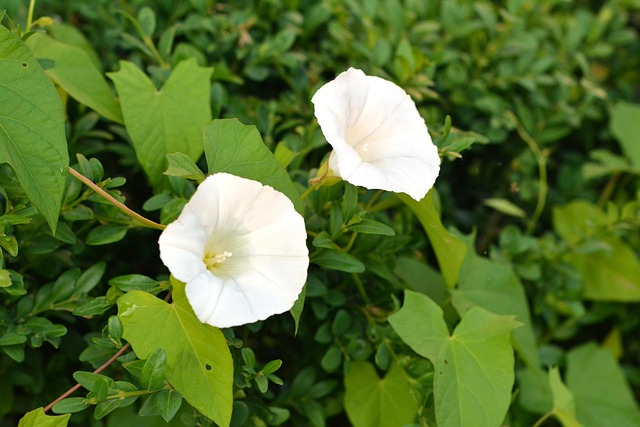
Bindweed (Convolvulus) is a common garden weed and a herbaceous perennial plant that is often confused with Japanese knotweed.
Growing up to 3m long, bindweed can be identified by its spirally arranged green leaves and its trumpet-shaped white flowers. It either grows across the ground or finds something to climb and grows upwards like a vine.
While bindweed can provide a source of food and nutrients for insects, moths and bees, it can be incredibly dangerous if consumed by some animals, in particular horses, as it can cause digestive and nervous system issues, leading to serious illness and even death in some cases.
You don’t have to remove bindweed from your garden, however, as it competes with other plants for sunlight, moisture and nutrients it can have a negative effect on the other plants in your garden.
To remove bindweed, you can either pull the roots out repeatedly so that it weakens and doesn’t flower, cut it at soil level to prevent it from growing, or use the systemic weedkiller glyphosate (which should be applied to the leaves, which travels to the roots as the bindweed grows).
7. White Clover
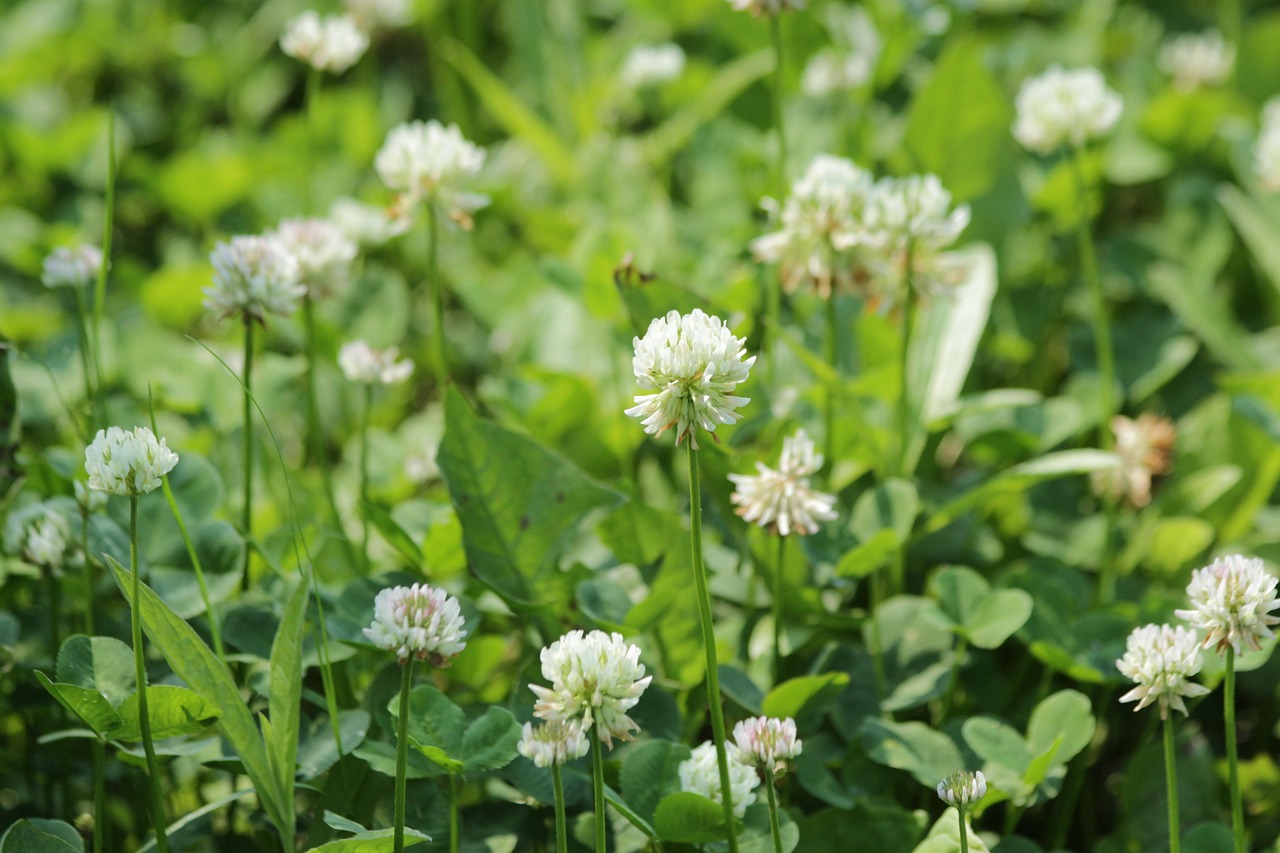
White clover (trifolium repens) is a herbaceous perennial plant which is native to Europe and Asia. Usually growing throughout spring, summer and autumn, it bears white flower heads between May and October. White clover can be found growing in lawns, fields, parks and roadsides and thrives in moist soils and mild weather.
This common garden weed can be identified by its trifoliate leaves with round tips and central vertical crease. Its creamy white flower heads attract bumblebees, butterflies and wood mice, making it a valuable weed for boosting local ecosystems and improving biodiversity.
White clover can spread easily through its seeds and stolons, often causing a widespread blanket over lawns and other areas of soil. Whilst it provides a valuable source of nutrients for many local animals, it can also steal nutrients from soil, depriving other plants.
To remove white clover, you can either fork them out from their roots or rake the grass before mowing to lift the stems.
A white clover with four leaves is extremely rare and considered by some to be very lucky, bringing good fortune to those who come to find them.

8. Bamboo
Bamboo is one of the plants most often mistaken for Japanese knotweed, mainly because of its jointed, upright stems. At first glance, those tall, segmented canes might look similar to knotweed’s hollow stems. However, there are some key differences: bamboo stems are woody, much taller, and its leaves are long and narrow, unlike knotweed’s broad, heart-shaped foliage. Bamboo also grows in dense clumps or spreads aggressively through underground rhizomes, making it a robust and sometimes challenging plant to manage.
To remove bamboo from your garden, start by cutting the canes down to ground level. Next, dig out as many of the underground rhizomes as possible — leaving even small sections behind can lead to regrowth.
For long-term control, installing a root barrier around the area is highly recommended, as this will help prevent bamboo from spreading into unwanted parts of your garden. Regular monitoring and maintenance are key to keeping this fast-growing plant under control.
Need Help Identifying Your Garden Weed?
If you’re wondering ‘what are similar-looking plants to Japanese knotweed,’ it’s important to know that several common garden plants, such as Russian vine, bamboo, and Himalayan balsam, share similar leaves or stems but differ in growth habits, flowers, and ecological impact.
Most plants are harmless; however, Japanese knotweed is a highly invasive plant that can cause serious damage to properties and negatively affect ecosystems and biodiversity. If you need help identifying the weed in your garden and suspect it is Japanese knotweed, then you can contact our team of experts today.