Winter can be one of the hardest times of the year to spot Japanese knotweed. Knowing how to recognise its distinctive winter canes and understanding how its underground rhizomes spread is key to keeping it under control.
Even though the plant dies back above ground during the colder months, correctly identifying Japanese knotweed in winter can help you avoid serious structural or property problems when it starts growing again in spring.
If you suspect you might have Japanese knotweed on your property, or you’re unsure whether it needs to be removed during winter, we recommend checking out our guide. It covers how to identify the plant, the most effective treatment methods, and practical tips for managing it through the winter months.
Our team specialises in Japanese knotweed removal and understands its growth patterns and behaviour, so we can offer you expert advice and proven solutions to deal with it effectively.
Concerned about Japanese knotweed?
Book a professional Japanese knotweed survey to confirm the plant, understand how far it has spread and identify the most appropriate treatment.
Book a knotweed surveyFirst of all, what is Japanese knotweed?
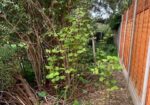
Japanese knotweed is a fast-growing, invasive plant originally from East Asia. It’s easy to recognise by its bamboo-like stems and heart-shaped leaves. Here is a great example:
Although it was first brought to the UK as an ornamental garden plant, it quickly spread and became one of the country’s most troublesome invasive species.
This plant grows rapidly and spreads aggressively, posing a serious risk to both residential and commercial properties. During the growing season, Japanese knotweed can shoot up by as much as 10cm a day. If left untreated, it can take over large areas, disrupt local ecosystems, and cause major structural damage to buildings and foundations.

The impact of Japanese knotweed
Japanese knotweed poses a serious risk to property owners throughout the winter months because of its aggressive and far-reaching root system. These roots can cause significant structural issues, from cracks in foundations to damage to paving, walls, and drainage systems. Its potential to harm both buildings and the surrounding environment makes winter identification especially important for homeowners and property buyers.
As well as physical damage, Japanese knotweed can also have a major financial impact. Properties affected by the plant can lose between 5-15% of their value, and the presence of knotweed often complicates or delays property sales.
For anyone planning to sell, Japanese knotweed can be a big red flag for potential buyers, leading to lower offers or even withdrawn interest. While it’s not illegal to have Japanese knotweed on your property in the UK, it is against the law to allow it to spread into the wild.
Does Japanese knotweed grow in winter?
Although Japanese knotweed appears to die back in winter, the plant remains very much alive beneath the surface. Its underground rhizomes stay active throughout December, January, and February, storing energy ready for regrowth in spring. These hardy root systems can easily survive the cold months and begin sending up new shoots as soon as temperatures rise.
Above ground, the plant’s canes remain standing but become dry, brittle, and dark brown in colour, one of the few visible signs of its presence during winter. By November, Japanese knotweed typically dies back to ground level, leaving behind these hollow, brown canes after its vibrant green leaves and white flowers disappear.
Despite their dead appearance, these winter canes are one of the most reliable above-ground indicators of knotweed during its dormant season.
While Japanese knotweed can be difficult to spot in the colder months, any suspicions shouldn’t be ignored. We highly recommend booking a professional site survey to confirm whether knotweed is present and to help prevent its regrowth in spring.

How to identify Japanese knotweed in winter
In winter, Japanese knotweed can be spotted by its tall, brown, and brittle canes that stay upright even after the leaves and flowers have fallen. Look closely for the subtle zigzag pattern and bamboo-like ringed nodes on the stems, which are a clear sign of the plant.
At the base, the crown connects to the underground rhizomes and may even show tiny buds for new spring growth. Even when dormant, these dense cane clusters give away the presence of Japanese knotweed, while the roots quietly store energy ready to sprout again when the weather warms.
Removing Japanese knotweed in winter
Removing Japanese knotweed properly takes care and expertise, and winter is actually the best time to do it. With the canes clearly visible and the plant dormant, it’s easier to safely excavate the rhizomes and prevent it from coming back in spring.
At Knotweed Specialists UK, we make sure your property is fully cleared of this stubborn invasive weed, giving you peace of mind.
If you need help identifying or removing Japanese knotweed this winter, give us a call on 023 8251 2752 or drop us an email at enquiries@knotweed-specialists.com.
Frequently asked questions
Does Japanese knotweed die in winter?
No, Japanese knotweed does not die in winter. While the visible leaves and stems die back, the underground rhizomes stay alive. This means Japanese knotweed in the winter is only dormant, not dead, and will regrow strongly in spring.
Proper Japanese knotweed winter identification is important so it can be managed early.
Can Japanese knotweed still damage property in winter?
Yes. Even though the plant looks inactive or “dead” above ground, its roots remain alive and aggressive. Japanese knotweed in UK winters continues to threaten drains, pavings, building foundations and local ecosystems if left unmanaged.
Is winter a good time to treat Japanese knotweed?
Yes. Winter is often the best time for Japanese knotweed removal, or planning a herbicide programme. With the plant is dormant and Japanese knotweed winter canes are visible, removal work can be carried out more effectively and with less disruption to gardens.